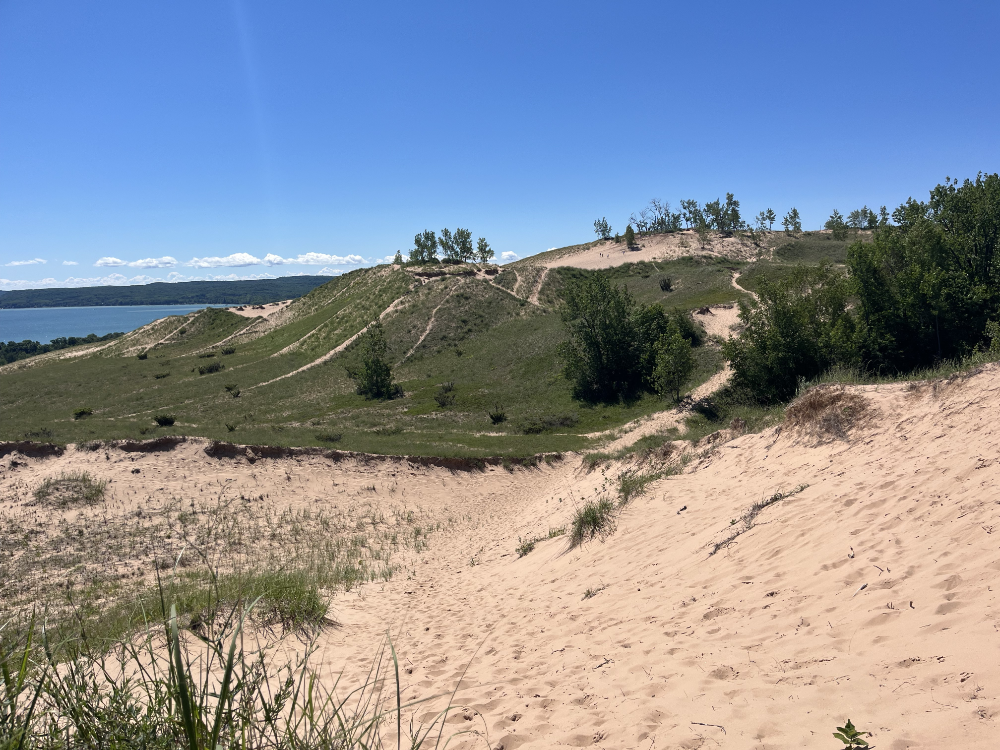
We took a week to camp on the shores of Lake Michigan and I can’t recommend it enough.
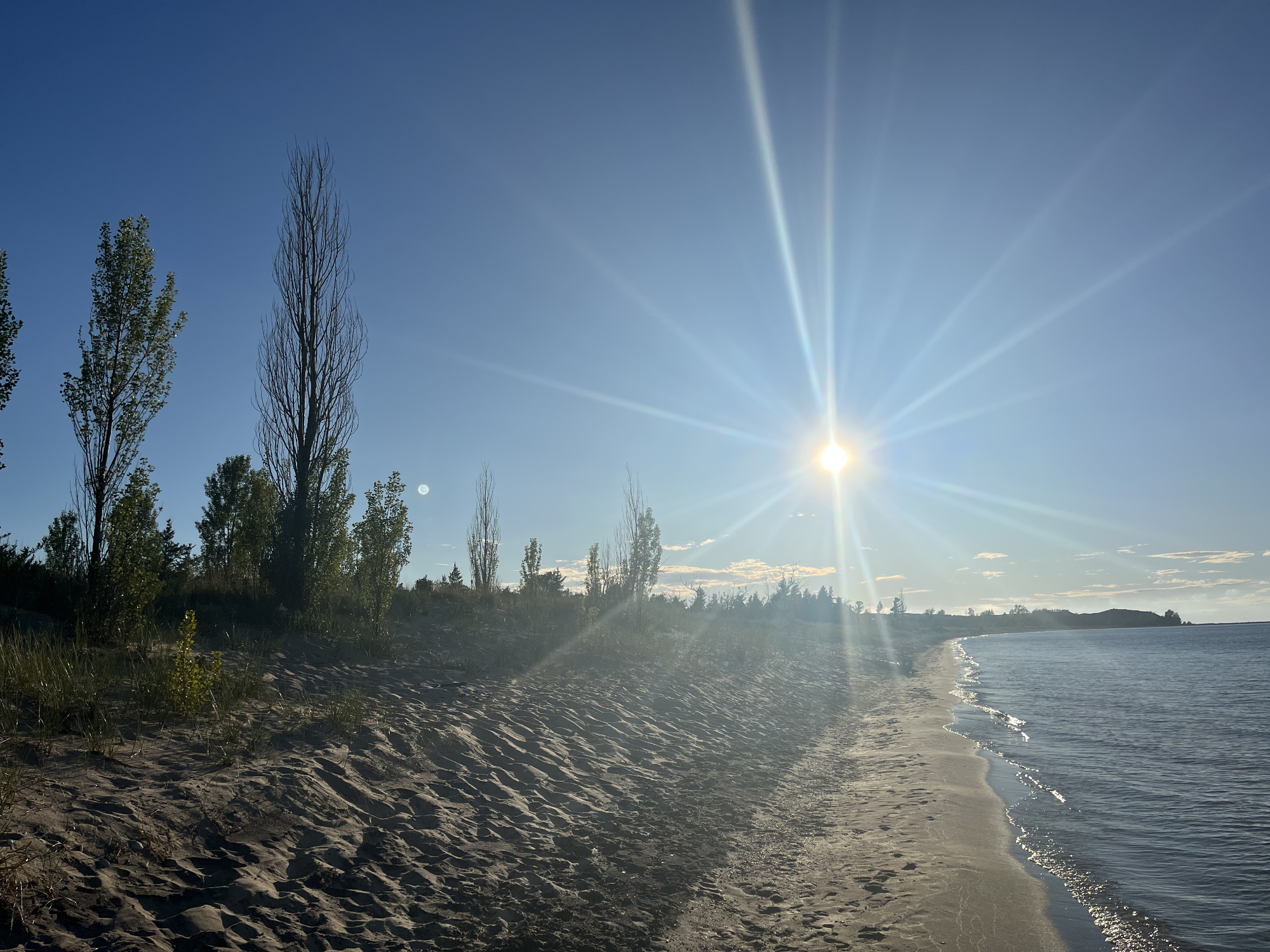
We loaded up our weird Australian camper and pulled it north to Sleeping Bear Dunes National Lakeshore in late June. It was a beautiful place to be. The campsite in the D H Day Campground was exquisite. The weather was in the 50s dF at night and up to 67df or so during the day. Perfect for hiking and cycling. If you’re my daughter, it’s even prime weather for swimming in a Great Lake that doesn’t get all that warm.
Gear Talk!
Of course, since we were camping in a property run by the National Park Service (US-0767 for those who care) I brought along some radio gear. Unlike my normal camping operation, I did things a little differently. We were totally off the grid for this one. No shore power at all, so I left the Hardrock-50 at home. Instead, I took along my IC-705 (which surprises no one) and my Penntek TR-45L. Why the Penntek?
Have you seen this thing? Are you asking me that for real?
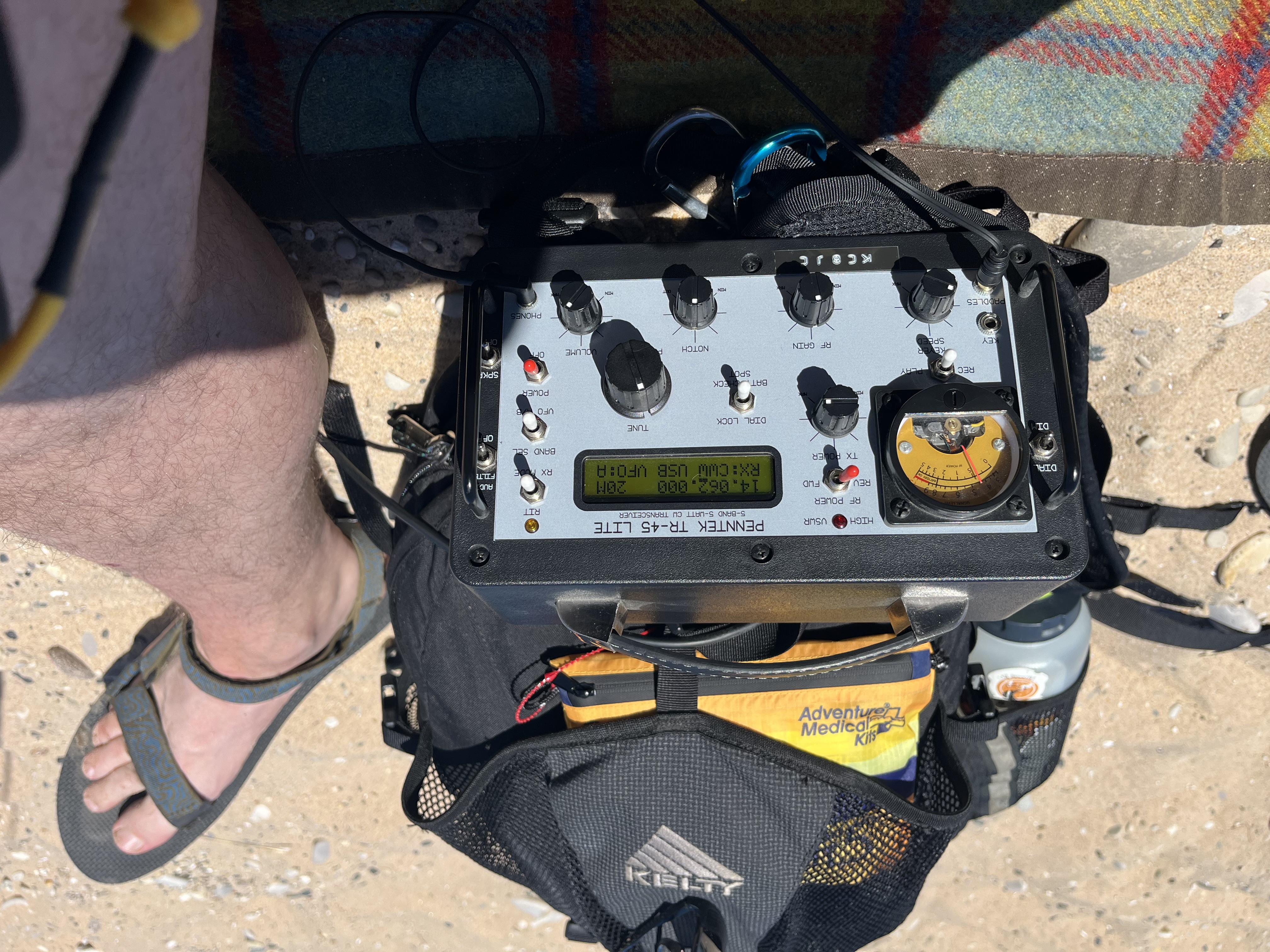
I’ve talked a bit about this rig in the past and the fact remains that it is absolutely wonderful to work a radio that has everything controlled with knobs and switches. Real knobs and real switches. No submenus. No nonsense. The speaker in it is solid but it really shines with headphones. The receiver is astonishingly good and the darned thing just gets out when it needs to.
The version that I have does have the Z-match option which we’ll get to in a second. It also has an internal battery that I added after I bought it. It’s great! Perfect for taking to the beach.
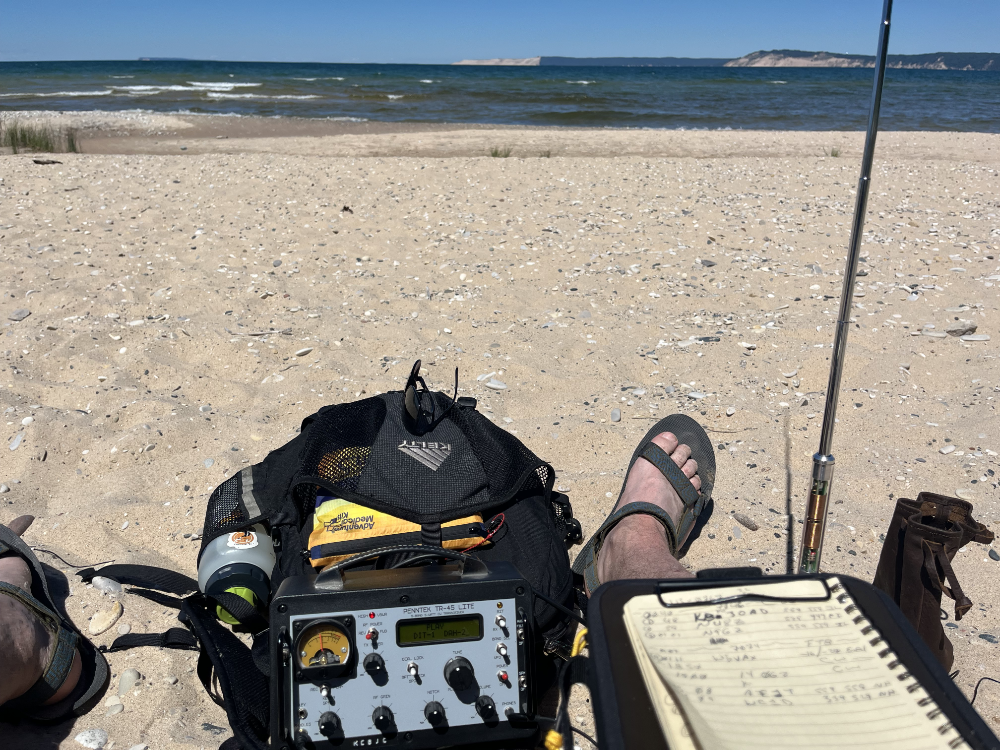
The Chameleon whip and spike were the setup for camp but I took the AX1 along so that I wouldn’t be encumbered or get in anyone’s way if I decided to work other places in the park - which I did (see photos above).
Modes
I really enjoy working CW. It’s my POTA mode of choice because it’s quiet and doesn’t disturb anyone in the area. In fact, if I have headphones on, you’re not likely to know I’m up to anything other than staring off into the distance or scratching something in a notebook. That’s how I like my activations.
That said, there’s a time and a place for everything. I was in a couple of situations where the bands were absolute garbage and I wanted to get my daily activation knocked out. I dusted off the Surface GO 2 tablet and fired up WSJT-X. It was definitely the right thing to do.
FT8
This was my gateway mode. Living where I lived and having no concept of things like POTA or even mobile operation when I first came to the hobby, FT8 was a great way to make contacts in a high noise environment while I learned the rules. Everyone (myself included) screams, “Just Get On The Air!!!” and that’s great advice! But for some folks, the thought of making a “mistake” or “ruining” a contact for another operator is a lot to tackle. FT8 (and other digital modes, to be fair) take the edge off. It’s a great beginner mode, perfect for less than amazing conditions, and fun. What’s not to like?
So I did a pile of it. Mostly in the late evening, which was early morning UTC, so that I could sneak in a little radioactivity while everyone else was otherwise occupied with sleeping or reading or whatever.
Learning Things
I mentioned the Z-match on the TR-45L. I built one from a kit once, used it a couple of times, and put it in my bag for emergencies. Part of taking the TR-45L along with me was to force myself to really understand how to get a match with that piece of gear. As with most things Ham Radio, I built it up to be bigger than it was. I don’t remember the video or I would link it, but the trick seems to be this: adjust one knob until you drop your SWR and then tweak the other knob watching to be sure that the SWR drops again. Repeat that process until you have a satisfactory match. In my case, that’s when the TR-45L’s angry red light goes away and the cool needle gauge reads something nice and low.
Me? I start with both knobs in the middle and fiddle with things from there. I’m sure there’s a more science-y way to do it, but that has worked really well for me and it’s easy. Not that anything about the process is very difficult, but you do need to remember to turn down the power and work in short bursts. We don’t want to burn anything out, right?
I would call myself quite accomplished with this piece of tech as I was changing bands a lot while using the whip. Not only were conditions rough, they were rough and volatile.
Getting Out
I was definitely getting out on the beach with that little unit running well under 5 watts.

But the activations were slow. Nothing wrong with that! For the most part, I didn’t have anything else to do or anywhere else to be. That’s the beauty of getting out to a place like that. If I wasn’t hiking or on my fat bike, I could be enjoying some radio fun.
QSO Map
Here’s what it looked like. All 5 activations piled up on top of one another.

Final
We ended up bugging out a day early due to heavy rain. We had easily 2.5” of standing water in the campsite after rain that started overnight and wasn’t going to stop that day. While there’s no bad weather (only insufficient gear), the fun to work ratio wasn’t aligned for us. No biggie. We got home with time to put things away and we’d had a great time. Can’t recommend that park enough!
73 and thanks for reading!